The Little-Known Interior of Tsuyama Castle’s Keep
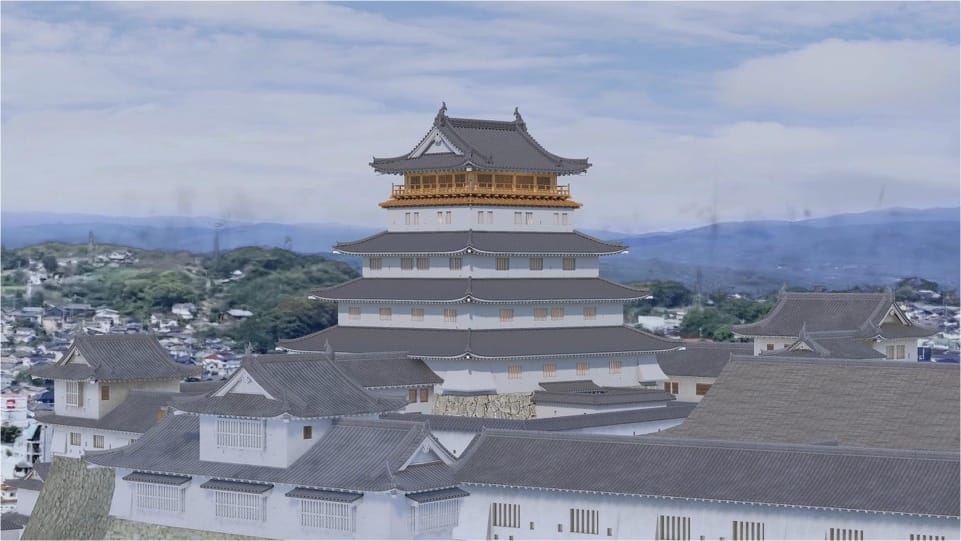
Tsuyama Castle’s keep had a five-tiered exterior and was roughly 22 meters tall, making it fairly large for its time.
It stood on a stone base that was itself 6 meters tall.
Structurally, the floors of the keep are essentially just stacked atop one another, with each being somewhat smaller than the one below.
The keep was placed not in the center of the castle, but at the western end of its main enclosure.
This was so that, if worse came to worst, the keep could serve as a final fortification.
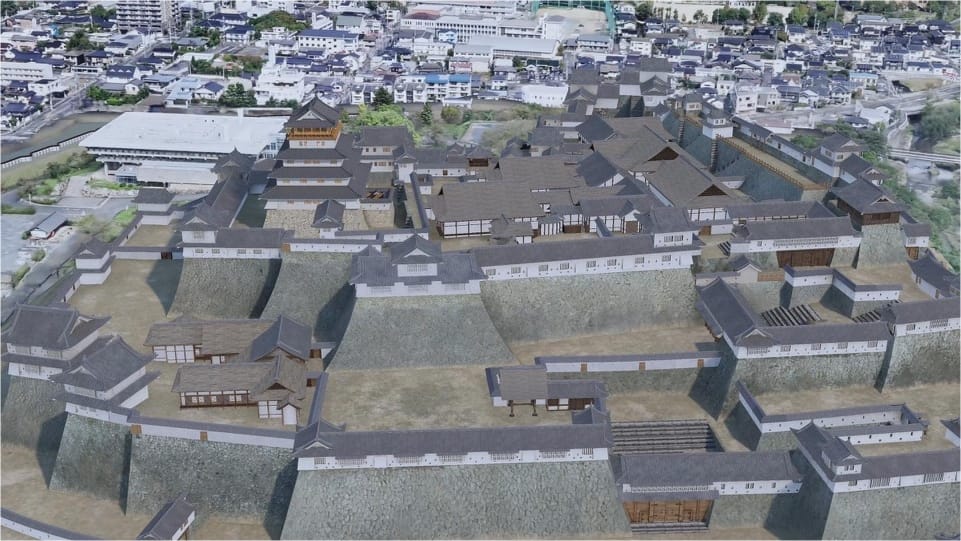
To prevent the keep from being easily reached, the path of approach was masterfully designed.
To the south, the route bends sharply, and to the north, the stairs can be removed, cutting off the way up.
Another protective feature was the “drum wall” to the west of the Bitchu Yagura tower, named for its structural resemblance to a drum.
It had two outer walls with pebbles and tile shards packed between them, designed to absorb the impact of bullets.
Developed in the early seventeenth century, this method provided strong defense with minimal effort.
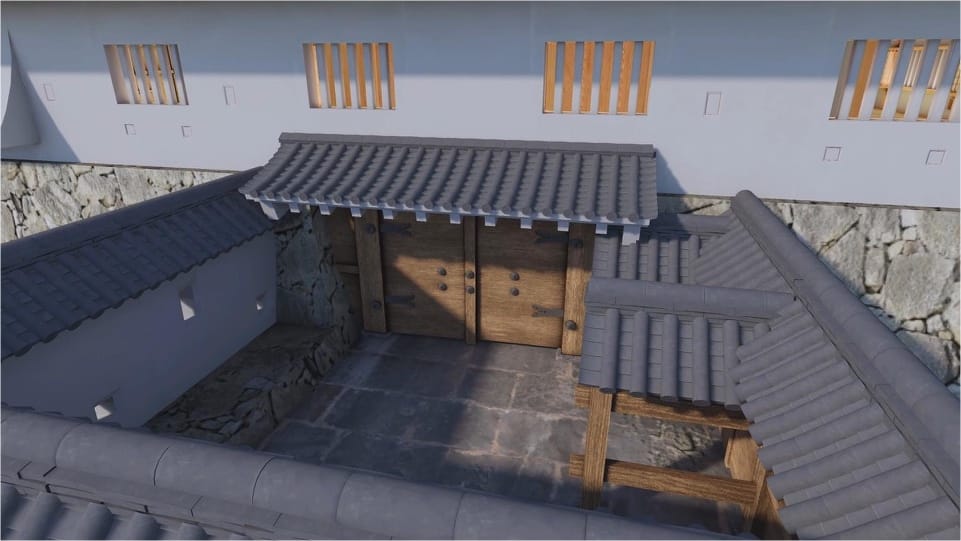
The entrance to the keep was located at the stone foundation level.
This level below the keep served a dual purpose: supporting the keep above, and acting as the first defensive space to halt intruders.
Defense began from inside the stone base itself.
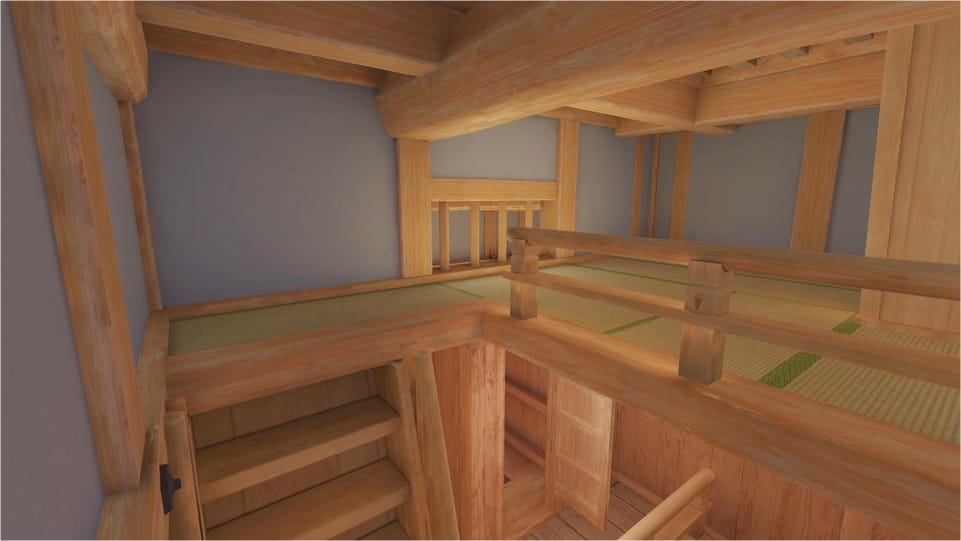
The first and second floors were designed as spaces for people to live in.
There was a mezzanine floor between these, below which were the toilet, bath, and a changing room for before and after bathing.
Few Japanese castle keeps featured all of these amenities,
and in this case, they were included with the expectation that the lord and his entourage might need to spend long periods of time in here.
The outer wall of the keep had 101 gun ports and 59 arrow slits.
Records from the time show where they were located,
and the recreation is based on those records.
As you arrive at the top floor, the character of the space changes from what you’ve seen below. In the center is a raised tatami platform where the lord would sit as head of the domain:
the highest-status place anywhere in the keep.
This top floor was designed with a focus not on defense,
but rather on symbolizing the lord’s authority over the domain.
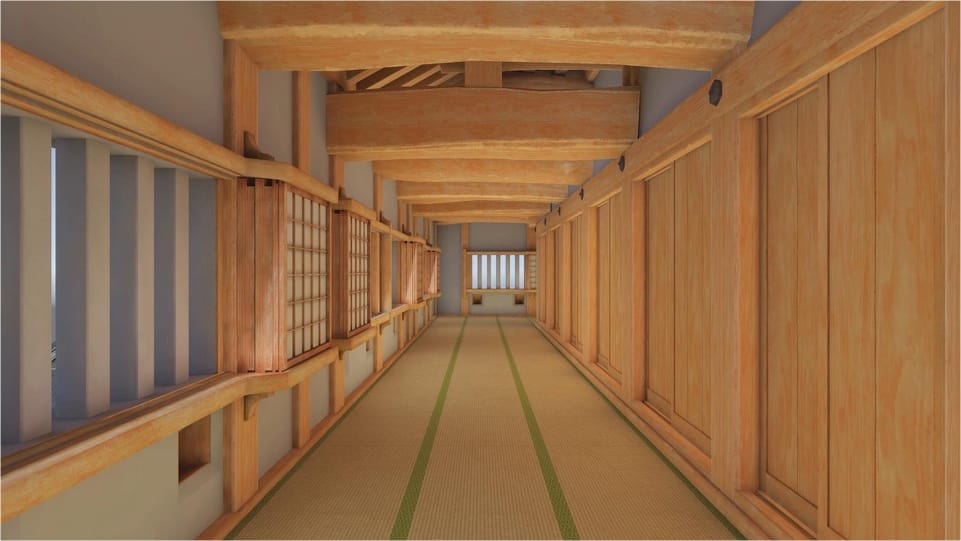
A single bell once hung here on this top floor.
The bell had a Western-influenced design and was a gift from Lord Hosokawa Tadaoki of Kokura to Lord Mori Tadamasa of Tsuyama, in celebration of the castle’s completion.
The bell remained here until the castle’s demolition in 1874.
As you step outside onto the balcony, the view suddenly opens up.
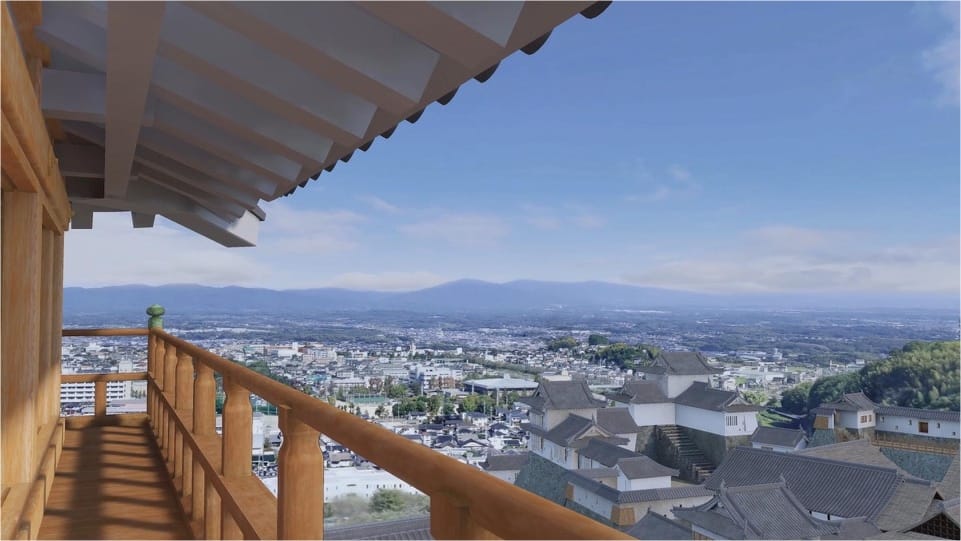
The keep at Tsuyama Castle was designed so that only the top floor offered wide views of the surroundings.
From here, the lord would have looked out over both the castle grounds and the town below.
The keep served not only as a defensive structure in times of war, but also as a symbol of the lord’s authority as ruler over the domain.
