Takano Shrine
Takano Shrine, located along the Yoshii River, is the second-highest-ranked shrine in the Mimasaka region. The main hall was built in 1663, and it inherits the Nakayama-zukuri architectural style seen at Nakayama Shrine. The shrine is home to numerous Cultural Properties, including wooden statues of attendants and pairs of lions, reflecting its long history and deep-rooted spiritual heritage.
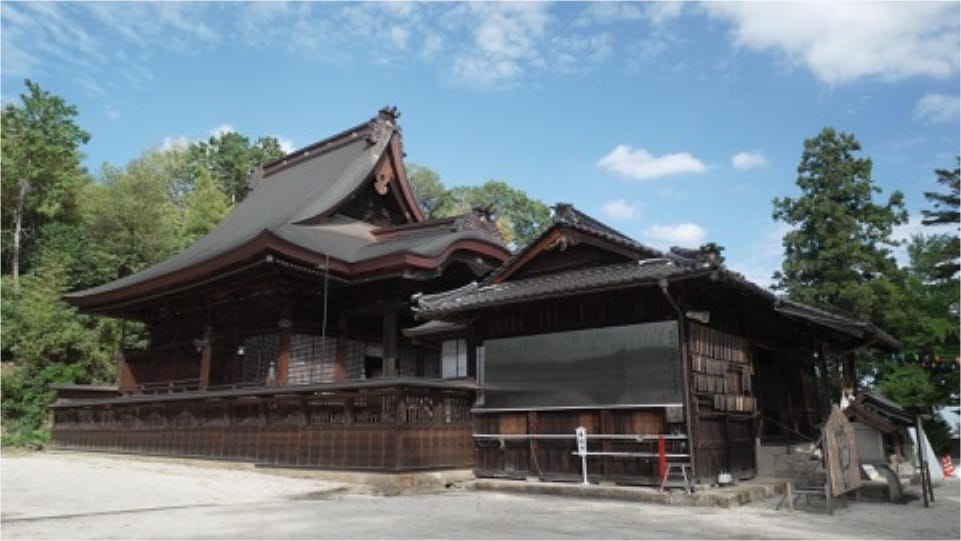
By the side of the Yoshii River in western Tsuyama is the ancient Takano Shrine, regarded as the second-highest-ranking shrine of the Mimasaka region. According to shrine tradition, it was established around 534, and gained special status in the ninth century.
As the warrior class rose to prominence from the fourteenth century onward, many of its leading figures contributed to the shrine’s construction and supported its rituals, further enhancing its status. The current main hall, built in 1663, follows the Nakayama-zukuri style, with a hip-and-gable roof and a gracefully curved portico. The shingles are made of layers of cypress bark. The roof is steeper and taller than that of Nakayama Shrine, perhaps in a bid to outshine the older shrine’s elegance. The original roof of layered cypress-bark shingles, another architectural feature of this local style, was replaced with copper plates in 1929. Although the shrine was once surrounded by a large sacred forest, only a few towering zelkova trees remain.
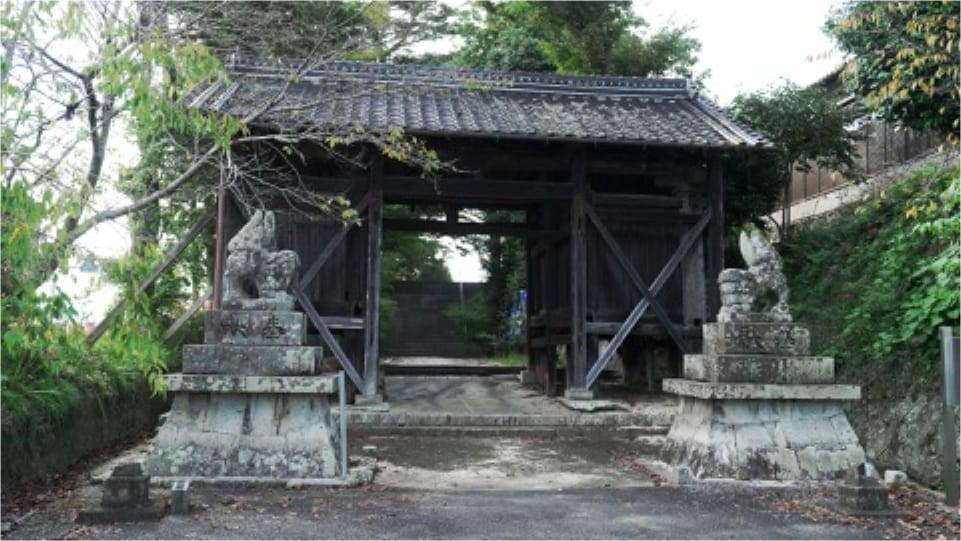
At the base of the stone steps leading up the wooded hill to Takano Shrine stands the Zuijin Gate, which replaced an earlier gate in 1191. A remarkable wooden name plaque that once hung on the gate is one of the shrine’s treasures. The plaque’s frame is about 76 centimeters high and 60 centimeters wide, and is carved with symmetrical spiral patterns on each side. At its center is a thin copper plate, just 3 millimeters thick.
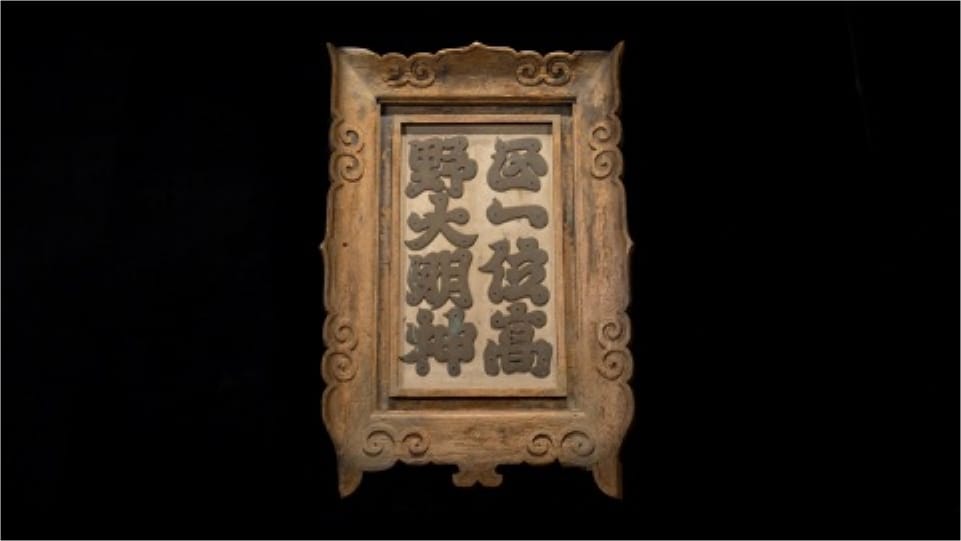
The plate is inscribed with the name of the shrine’s deity, Takano Daimyojin, along with the honorific title of Sho-ichi-i, which means Senior First Rank. This was the highest court rank a deity could receive and is a mark of its spiritual authority. The plaque is designated an Important Cultural Property.
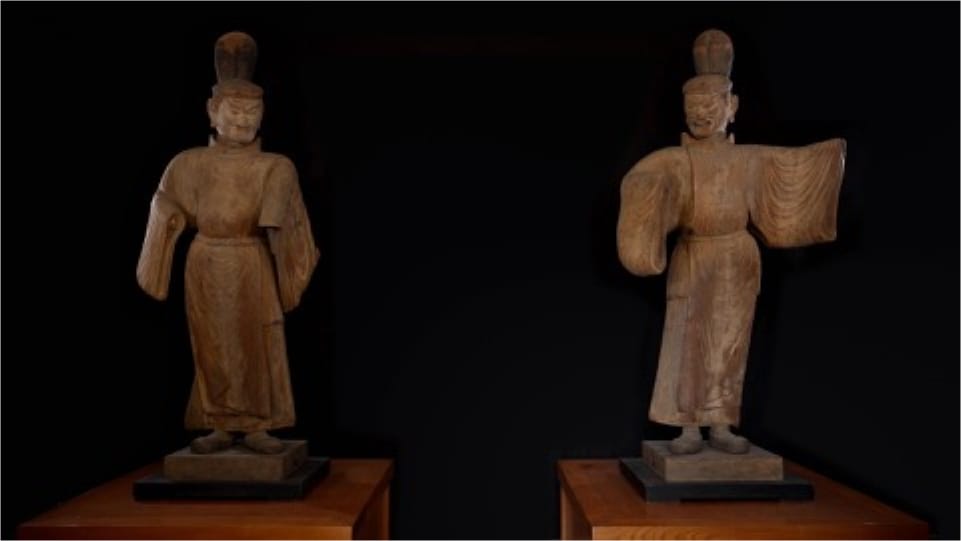
The treasures of Takano Shrine include a pair of standing wooden guardian figures that once flanked the Zuijin Gate. Like many shrine and temple guardians, one figure’s mouth is open as if forming the sound “ah,” symbolizing beginnings, while the other’s mouth is closed as if forming the sound “un,” symbolizing endings. These represent the first and last sounds of the Sanskrit syllabary, expressing a Buddhist concept not unlike the Biblical “alpha” and “omega” that signify the beginning and end of all things.
Both guardians wear court caps, robes, and shoes, and are believed to have once held bows and arrows in protective poses. Carved from cypress in 1162, they were originally painted in bright colors, though most of the pigment has worn away. An inscription records that the statues were made by a Buddhist sculptor, with support from local donors.
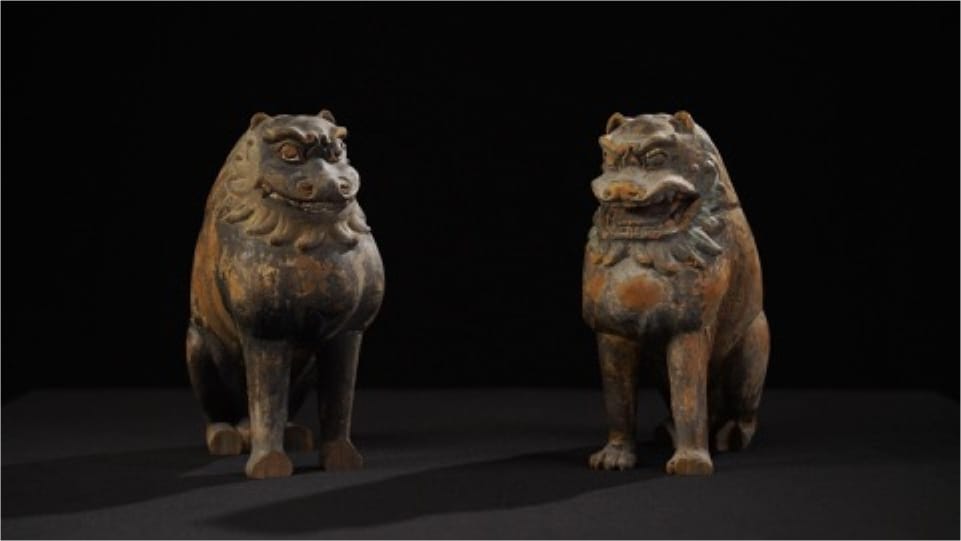
Among the Takano Shrine treasures are two pairs of wooden shishi, traditional guardian lions. Carved from Japanese cypress, they are clearly identifiable as lions, as they lack the single horn of the mythical lion-like guardian animals known as komainu that are also found guarding shrine and temple grounds.
Like other guardian figures, one lion in each pair has an open mouth while the other’s mouth is closed. These represent “ah” and “un,” the first and last sounds of the Sanskrit syllabary, symbolizing beginnings and endings. The larger pair, about 70 centimeters tall, dates back to the ninth century, while the smaller pair, at 30 centimeters, is from the twelfth century.
