Innosho Residence Ruins
Located in western Tsuyama along the Yoshii River, the Site of the Innosho Residence marks the location of a residence built in the 14th century for use by the governor of Mimasaka Province. It is famous for being the setting of a legend of loyalty between Emperor Go-Daigo, who spent time here during his exile, and the warrior Kojima Takanori.
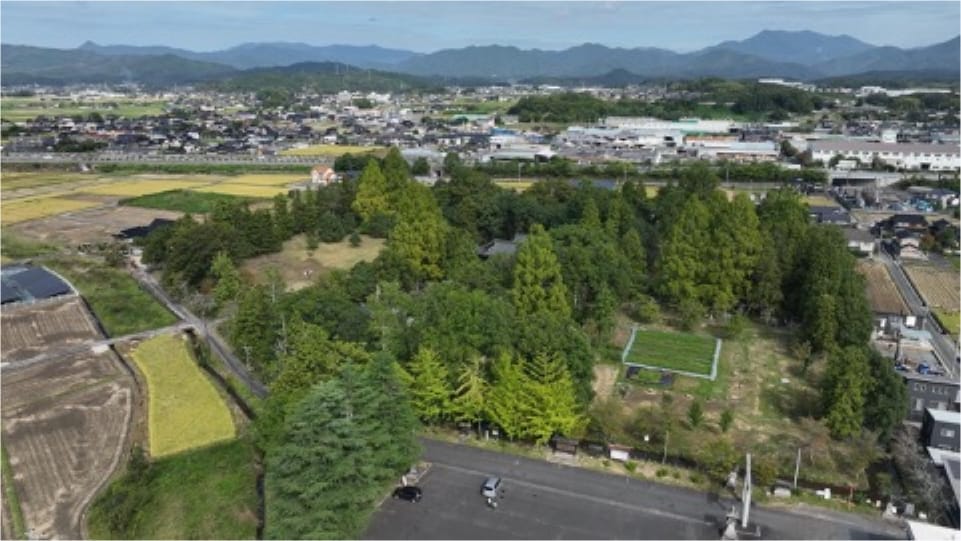
At the western edge of the city of Tsuyama, on a broad plain along the Yoshii River, lies the site of the Innosho Residence. This was the seat of the governor of Mimasaka Province, and was built sometime around the fourteenth century. At the time, this type of residence served both as a dwelling and as an administrative center where the governor would carry out the shogun’s orders and oversee regional affairs.
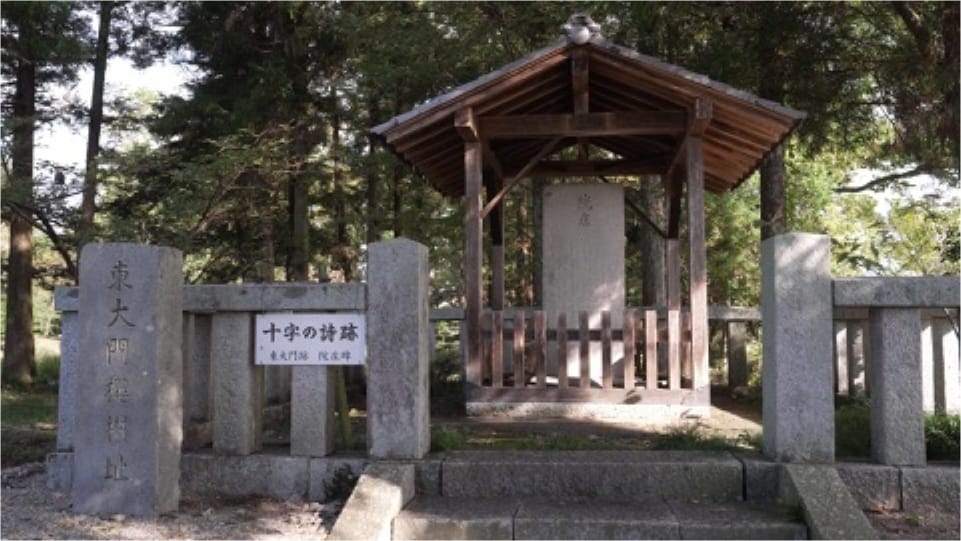
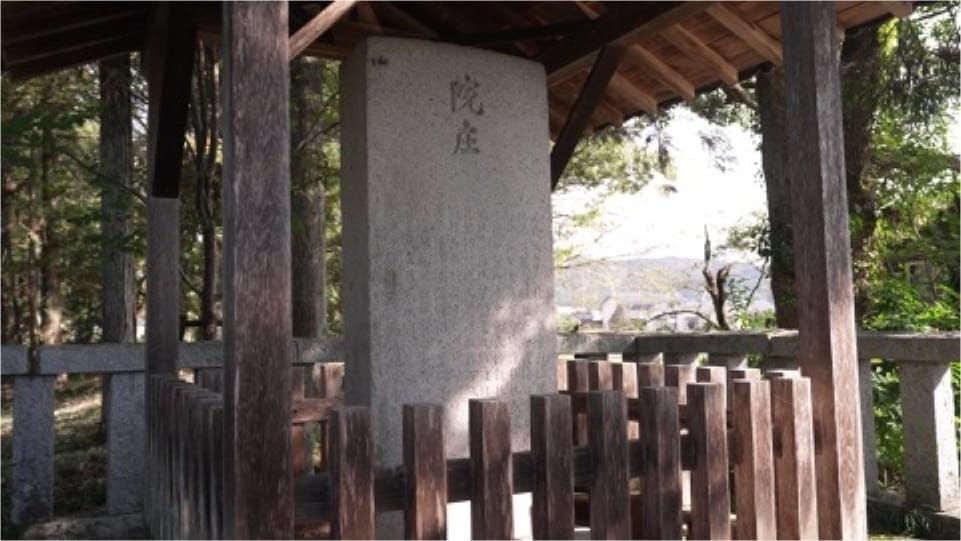
Today, only an empty plot of land has been preserved as the historic site of the residence. However, a stone marker for the East Gate contains 10 carved characters of a legendary message said to have been addressed to an emperor in exile in the fourteenth century. It is the reason this spot—and the impressive Sakura Shrine next to it—are still celebrated almost 700 years later.
The legend goes like this: In the year 1331, Emperor Godaigo failed in his attempt to overthrow the Kamakura shogunate. He was forced to give up the throne and ordered into exile on a remote island. Along the way, his captors stopped for the night at the governor’s residence in Innosho.
One of the emperor’s loyal retainers, Kojima Takanori, was determined to save him. He slipped into the compound, only to find it too heavily guarded for a rescue. At a loss, he turned to a symbolic act. On the bark of a cherry tree within the grounds, he carved 10 characters from a famous Chinese poem that told of unwavering loyalty. It was a coded message of hope, letting the emperor know he had not been abandoned.
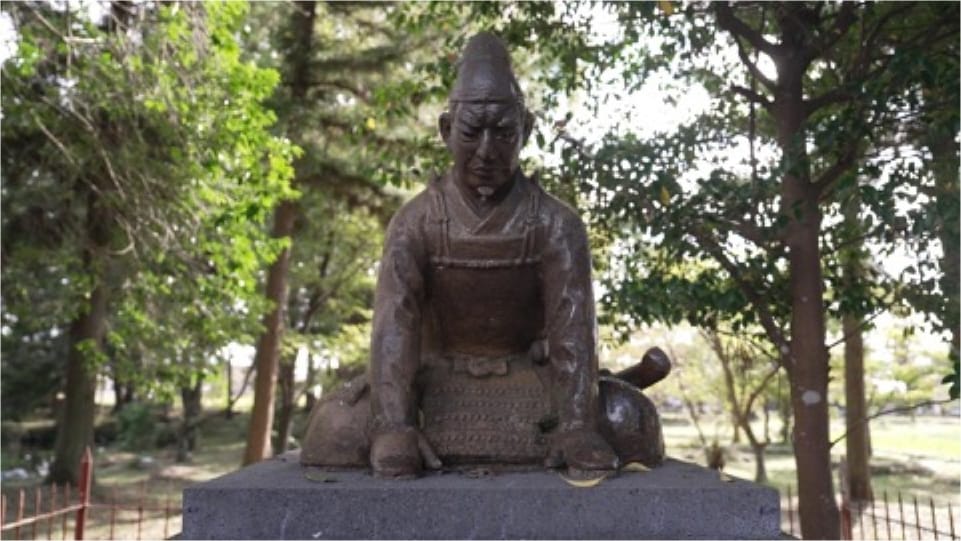
This tale of loyalty was recorded in the epic chronicle Taiheiki, and was celebrated for centuries thereafter. In 1869, local officials petitioned the government to build Sakura Shrine in honor of the legend.
History tells us that Godaigo did eventually escape exile, and he temporarily reclaimed the throne in 1333. Kojima is mentioned by name in the Taiheiki, though whether the two were ever reunited—or whether this dramatic event really happened—remains a matter of speculation.
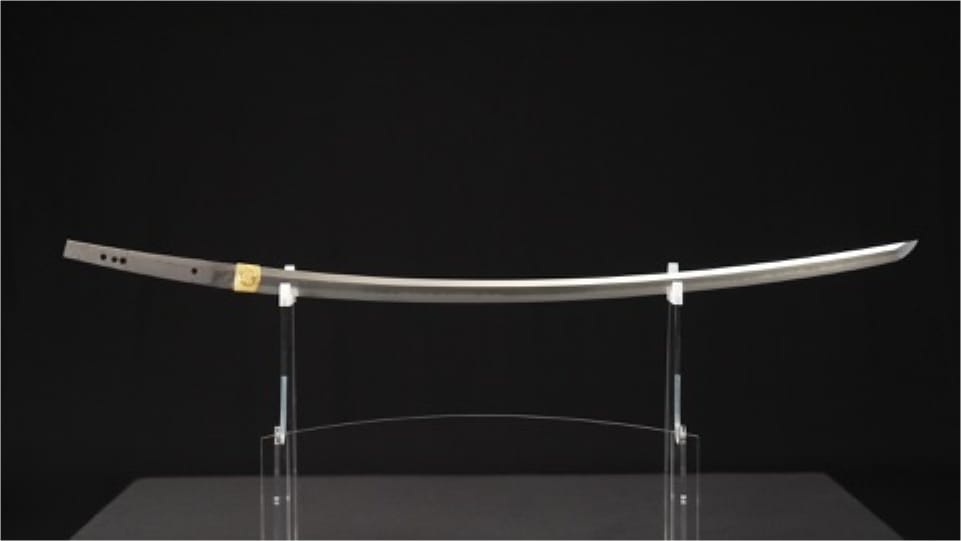
Among the treasures of Sakura Shrine is a sword designated an Important Cultural Property of Japan. It is a tachi sword, a precursor of the more familiar katana. It has a more pronounced curve and is meant to be worn with the blade facing down. Nearly 70 centimeters long, slender but with a bold sweep, the sword reflects the elegant yet commanding style of its age.
The blade bears the inscription “Kuniyuki,” the name of a thirteenth-century swordsmith. Masters like him passed down distinctive techniques, forging blades not only for battle but also as protective talismans and symbols of peace. Their swords were—and still are—admired as remarkable works of art.
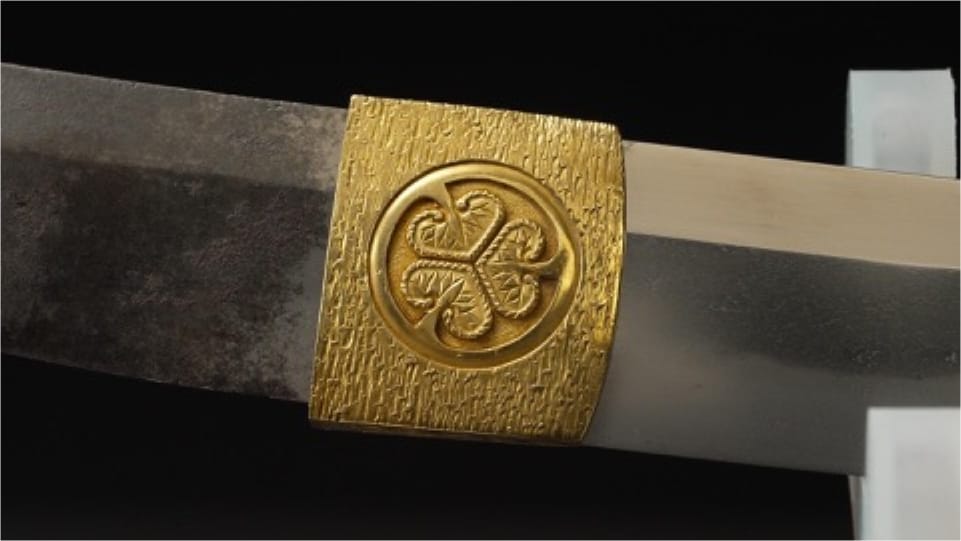
This sword was presented to the lord of the Tsuyama domain in 1710 by the sixth Tokugawa shogun, Ienobu. When Sakura Shrine was established in 1869, it was dedicated to the shrine. While it still belongs to the shrine, the sword is now entrusted to the Okayama Prefectural Museum.
