Nakayama Shrine
Nakayama Shrine, located in northern Tsuyama, is one of the most important shrines in the Mimasaka region. The main hall, rebuilt in 1559, features a unique architectural style known as Nakayama-zukuri, and is designated a National Important Cultural Property. It remains a focus of local traditions and faith centered around the deities of artisanry and livestock.
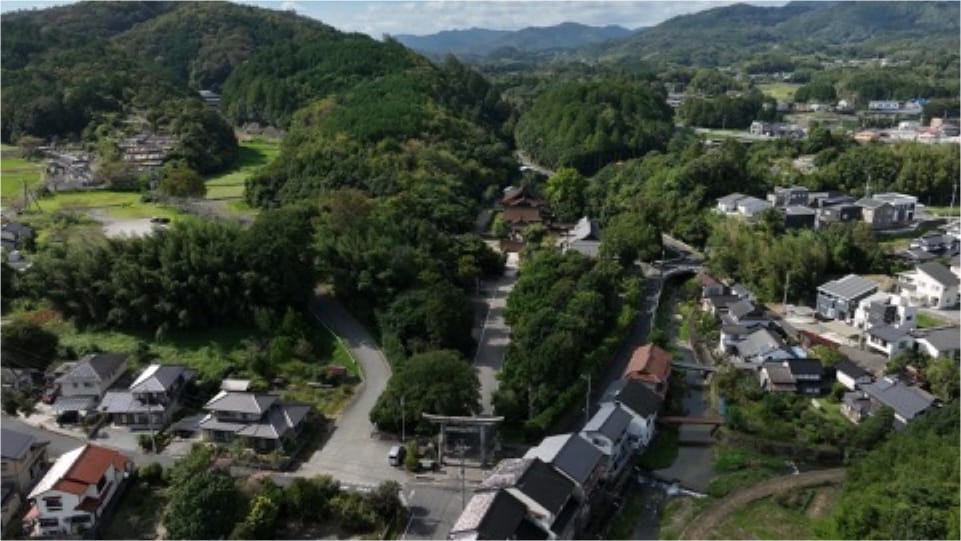
Nakayama Shrine, long regarded as the most important shrine in Mimasaka Province, stands just north of Tsuyama City. Its main deity is the kami of mirror-making and metalworking, honored for protecting artisans and their work.
Visitors pass by an 800-year-old zelkova tree before entering the approach to the shrine, marked by a distinctive torii gate with an unusual tie beam that does not pass through the supporting pillars. On the right of the path stands a large bronze cow statue, reflecting the shrine’s historical role as a guardian of cattle and horses—livestock that played an important role in farming and transportation. This area was known as a center of the cattle and horse trade, with fairs held outside the gate. Farther on, beyond the traditional purification pavilion, is a pair of statues—mythical lion-like guardian animals known as komainu.
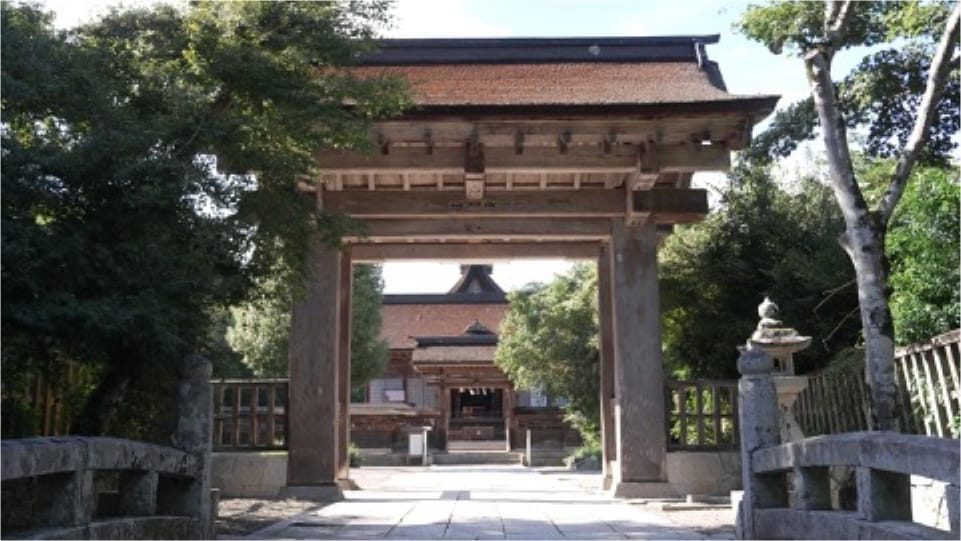
The Shinmon Gate, relocated here from Tsuyama Castle in 1874, has a sturdy frame and a gently sloping roof of layered cypress bark, lending an air of dignity and solemnity to the shrine grounds.
For centuries, Nakayama Shrine has been a spiritual and cultural landmark of the Mimasaka region. It is said to date back to 707, and was granted elevated status by the imperial court in the ninth century. The main hall was rebuilt in 1559 after being destroyed by fire.
The shrine is celebrated for its unique architectural style, known as Nakayama-zukuri. It is the oldest and largest example of this style, which is found mainly in the Tsuyama area. Among its features are a square, three-bay layout, an impressive hipped roof of layered cypress-bark shingles, and a gabled entrance crowned with a curved portico.
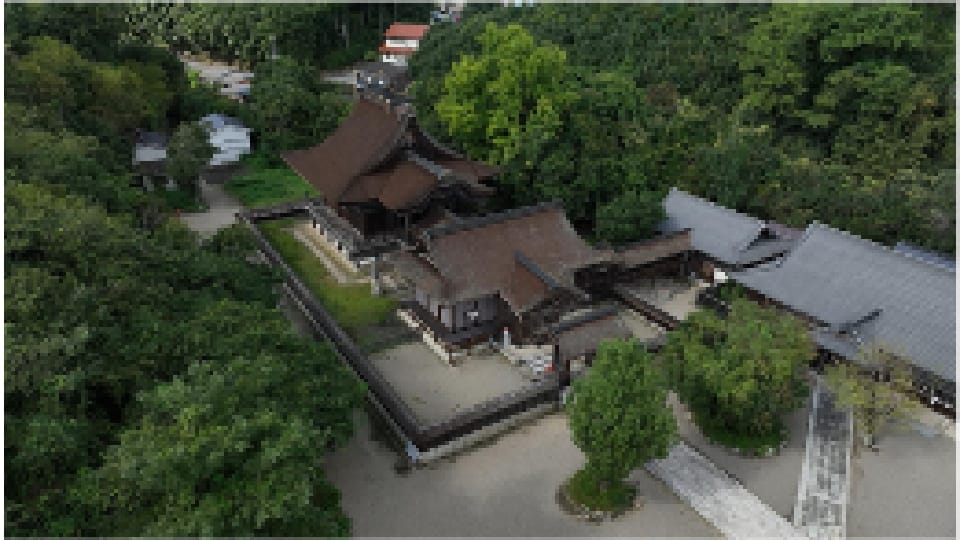
Nakayama Shrine’s main structure consists of three connected sections. The first is the haiden, or worship hall. It is open to all worshippers, and visitors may pray and leave offerings. It has a hip-and-gable roof covered with cypress-bark shingles, and a gracefully curved portico at the front. The ceiling of the hall is decorated with recessed panels, forming a lattice of wooden squares
The heiden, or offering hall, connects the worship hall to the main hall and is where the priest recites prayers. Both the haiden and heiden were built in 1922, during repairs to the main hall, and were designated Tangible Cultural Properties in 2021.
The honden, or main hall, enshrines three deities. It was built in 1559, and was originally adorned with vibrant colors and gold statuary. Japanese tastes later shifted, influenced by an aesthetic associated with the practice of tea that valued the beauty of aging, and structures were left to show their years of wear. Only faint traces of the hall’s former splendor can be seen today. The hall was designated an Important Cultural Property in 1914.
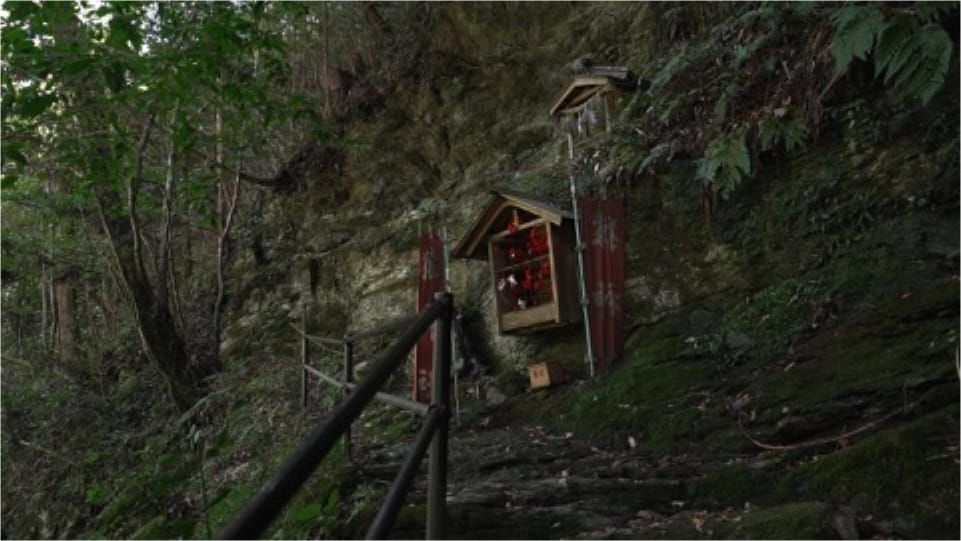
Deep within the sacred forest of the shrine grounds, up a steep and narrow mountain path behind the main sanctuary, is Saru Jinja, or Monkey Shrine. This small, thatched-roof structure is built into the rock face, and is believed to enshrine the spirit of a monkey mentioned in a twelfth-century anthology of Buddhist tales.
The Monkey Shrine deity is traditionally revered as a guardian of safe childbirth for cattle and horses. Even today, worshippers leave tiny monkey figurines made of cloth or clay as symbolic offerings to this protective spirit.
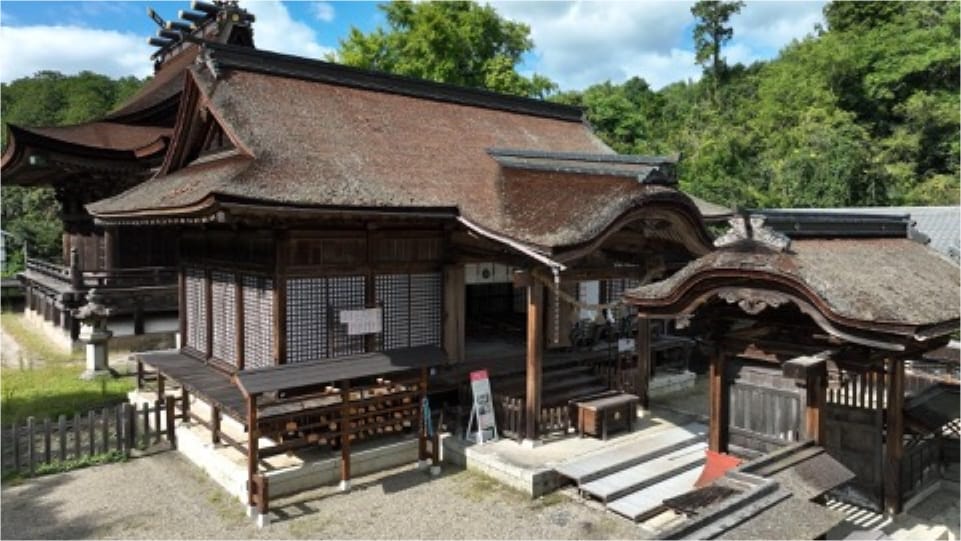
There are more than ten examples of the distinctive Nakayama-zukuri architectural style in the Mimasaka region, and five of them are found in Tsuyama. The main hall of Nakayama Shrine, built in 1559, is the oldest, while the others date from later centuries. All have a square floor plan, a hip-and-gable roof, a curved front portico, and other shared features.
The exact origins of this style are unclear, but it appears to have been influenced by the gabled roof of Izumo Taisha in Shimane Prefecture, one of Japan’s oldest and most important shrines. The style likely spread throughout the Tsuyama area under the unifying religious policies of the Mori family, once rulers of Tsuyama domain.
