Hongenji Temple
Hongenji is a Rinzai-school Zen temple located in central Tsuyama. It flourished as the family temple of the Mori clan, which itself dates back to Mori Tadamasa, the lord for whom Tsuyama Castle was originally built. The temple buildings and mausoleum tell the story of the Mori clan and the cultural heritage of the Tsuyama Domain.
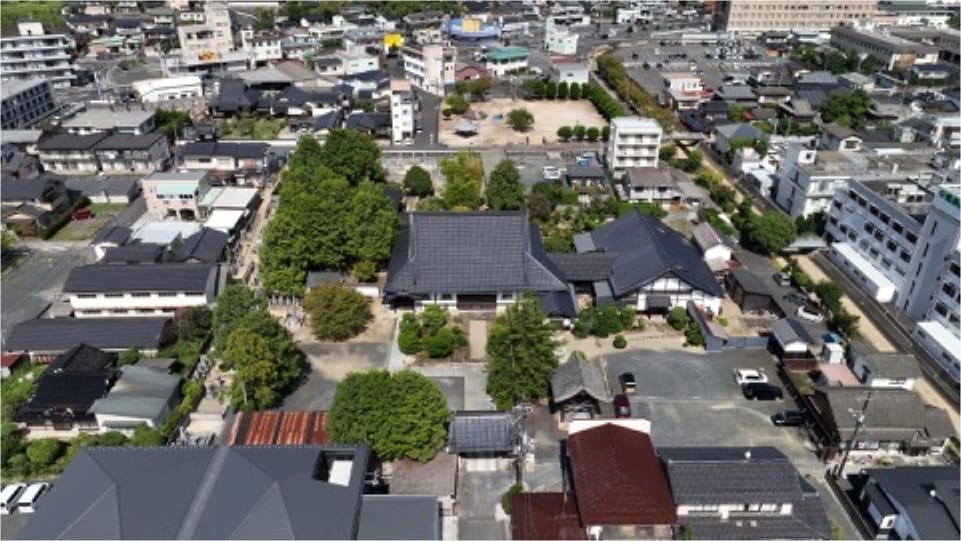
Hongenji Temple is located on the west side of central Tsuyama. It is the family temple of the Mori clan, who ruled the Tsuyama domain for 94 years from the beginning of the seventeenth century. Hongenji belongs to the Rinzai tradition, one of the three main schools of Japanese Zen Buddhism. Over the centuries, Rinzai temples became not only religious sites, but also centers of art, architecture, and cultural life.
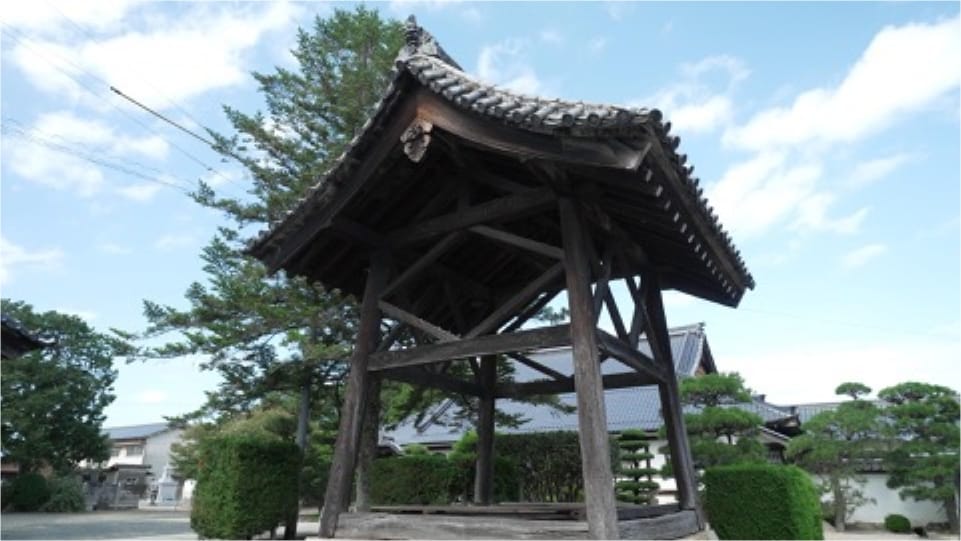
Visitors to Hongenji pass through an outer and an inner gate, a rare layout for Tsuyama. In earlier times, the path between them was flanked by stone and earthen walls, giving the temple the air of a fortified compound. The inner gate features the four-pillar, gabled roof style often used in the seventeenth century, and a bell tower that once housed a large temple bell stands nearby.
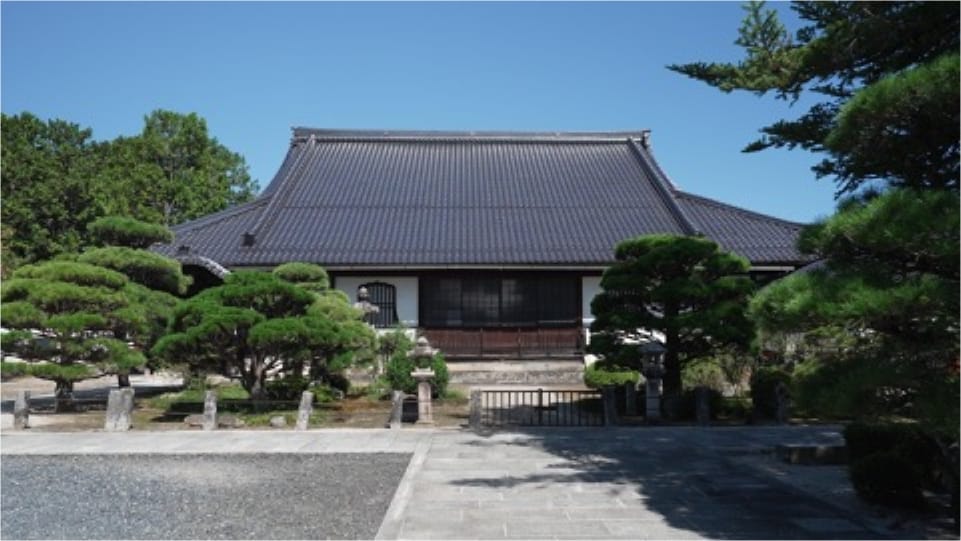
The main hall was constructed in 1607 by Mori Tadamasa, the first lord of the Tsuyama domain and the builder of Tsuyama Castle. In 1683, the temple was given the name Hongenji, taking the lord’s posthumous Buddhist title.
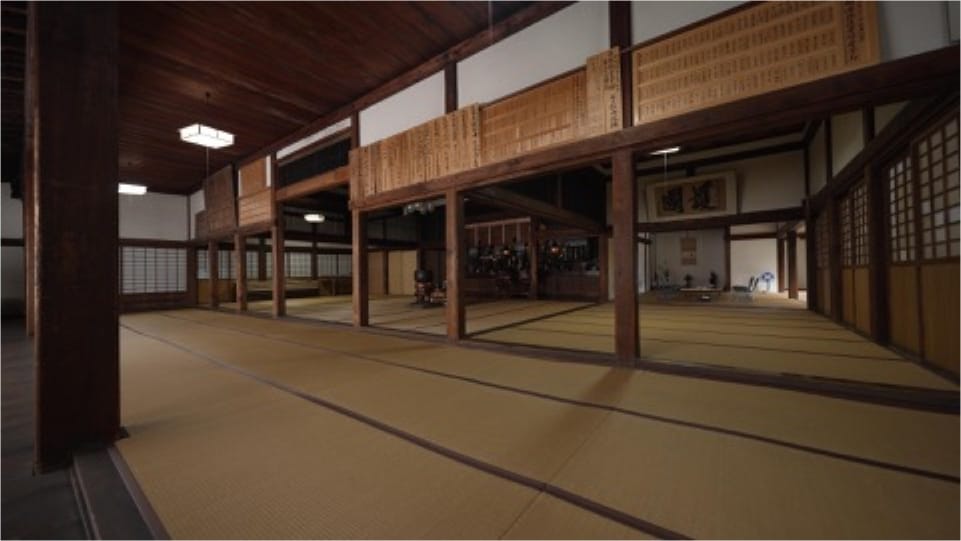
At over 400 square meters, the main hall was modeled on the living quarters of a Zen abbot.
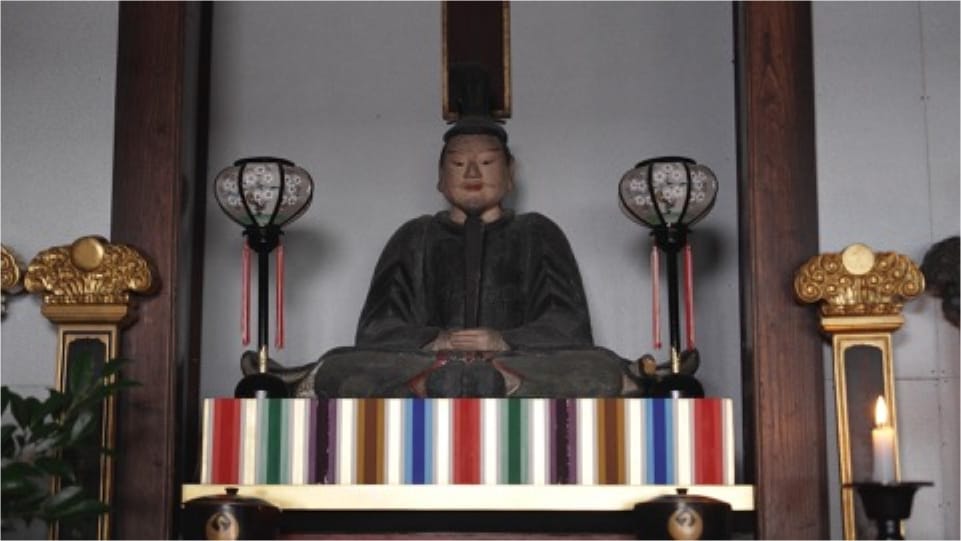
It combines worship space with ordinary rooms, including a tatami-floored hall and a wooden veranda. In places of honor stand both the principal Buddha image and a wooden statue of Lord Tadamasa. Remnants of its years as the Mori family temple, such as nail covers featuring the family crest, can be seen on the wooden beams.
An inked inscription on its ridgepole, dated 1607, is the earliest known reference to the name “Tsuyama.”
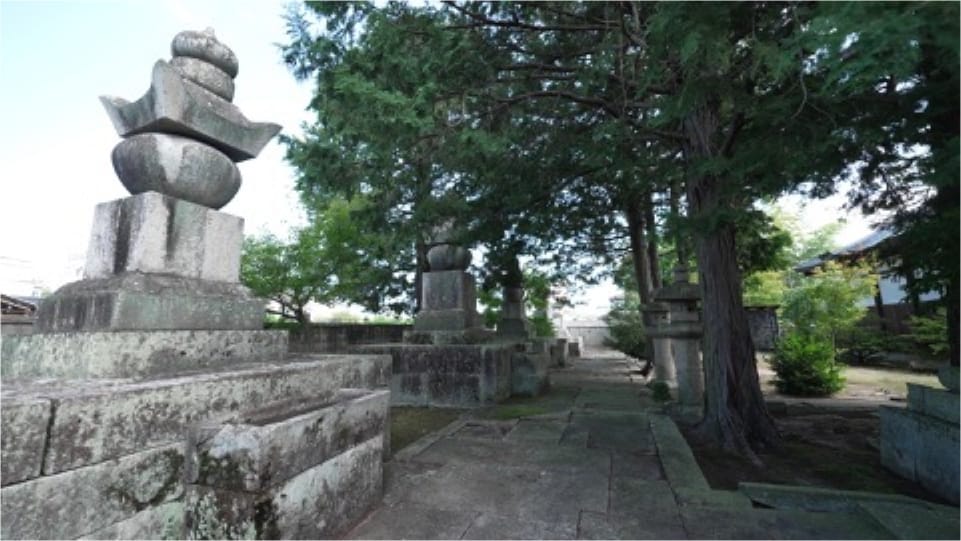
To the east of the main hall lie the priests’ quarters, rebuilt in the eighteenth century, while the Mori family mausoleum stands to the west. The mausoleum’s front gate, richly carved and once brightly painted, is designated an Important Cultural Property, as are other structures in the complex. Behind the mausoleum, on the north side, are seven tall stone stupas built for Tadamasa and his family. They face the mausoleum and are aligned with the keep of Tsuyama Castle to the east.
